Crawl space repair: water, fallen insulation and damp wood
Repair deals with what has already gone wrong under the floor. Most of it traces back to water that should never have reached the crawl space.
Start outside the hatch
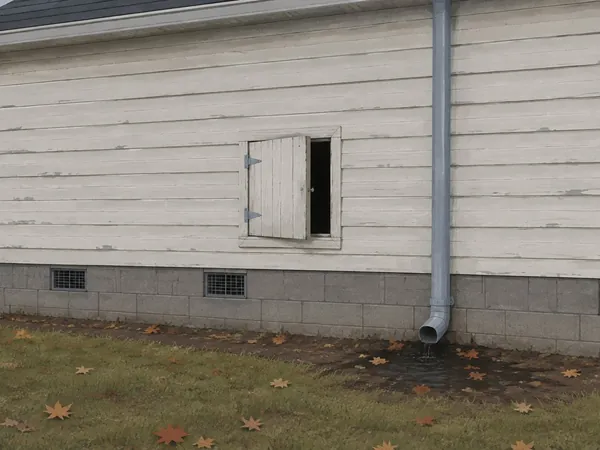
Before anyone crawls in, walk the outside of that part of the house. Look at where the downspouts end, whether the soil tilts toward the foundation, whether the vents sit at ground level where a puddle can pour through them, and whether the hatch still closes.
A crawl space under an addition often takes the roof water from both the addition and the main house. Moving a downspout can do more than anything done underneath.
Standing water under the house
Work out when it appears. Water that follows rain or a thaw is runoff or groundwater. Water that is there in a dry spell is more likely a pipe, and the water meter will show it: if the dial moves with every tap shut, call a plumber.
For rain and groundwater, the repair inside the crawl space is a shallow drain around the inside of the foundation leading to a small sump basin and pump. Nothing else done under the floor will last while water still stands there.
Insulation on the ground
Glass-fiber batts pushed up between the joists soak up moisture from the air below. They get heavy, sag and drop. While they hang there wet, they hold water against the wood.
The fix is to pull them all out, not to push them back. What replaces them depends on the plan for the space. If it stays vented, new batts go in with proper supports. If it is being closed, rigid insulation goes on the walls and the floor is left bare.
Damp or soft wood
A moisture meter pressed into a joist gives a number, and the number matters more than how the wood looks. Ask to see the readings in several places. Surface mold on sound wood is cleaned off and the wood is left to dry once the water is dealt with.
Wood that has gone soft, a beam that has dropped or a floor that bounces is framing work. Some waterproofing companies do it and many do not, so say on the call if the floor above sags.
Ask after the inspection
- Did you find where the water comes from, or only where it ends up?
- What moisture readings did the joists give, and where?
- Is the wet insulation coming out, and what goes in its place?
- Do you repair joists and posts yourselves or bring someone in?
- Would sealing the space be a better use of the money than repairing it as a vented one?
That last question leads to crawl space encapsulation, which is the usual next step once the water is under control.
Crawl space repair questions
Is some water in a crawl space normal?
Damp soil is common. Puddles that sit for days are not, and neither is water that returns with every storm.
Plumber or waterproofing company first?
If the water is clear and appears in dry weather, suspect a pipe and call a plumber. If it follows rain or snowmelt, it is runoff or groundwater, and that is waterproofing work.
Can I go in and look for myself?
Look from the hatch with a flashlight. Do not crawl through standing water: an extension cord or a pump cable may be lying in it.
Talk it through with a local company
Call and describe what the water is doing. You will speak with an independent local waterproofing company about coming out to look at your house.
For homeowners: basements, crawl spaces, sump pumps and drainage.
Call (262) 257-3901Racine Basement Waterproofing Help is a referral service, not a contractor. Calls may be recorded. Referral disclosure.